
A pricing strategy for safe, sustainable, affordable water
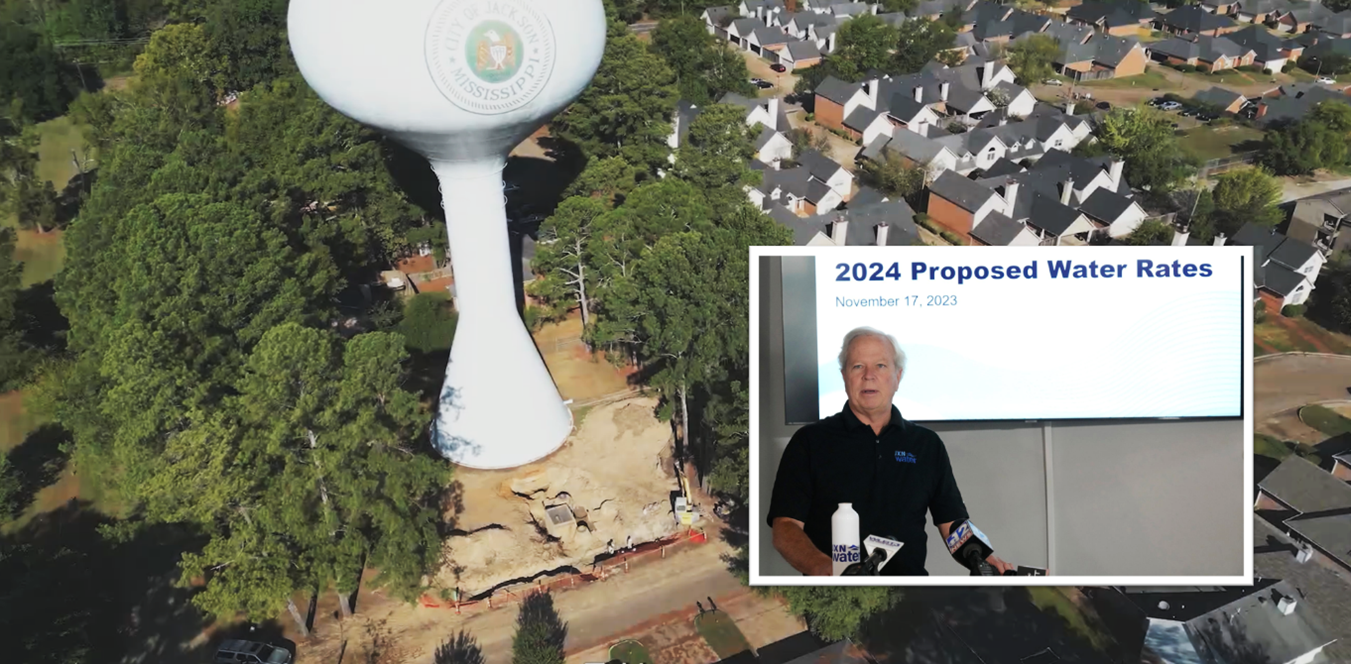
Not to be confused with Action Jackson
Last month JXN Water announced a simple and bold new strategy to finance sustainable, affordable water in Jackson, Mississippi.
As readers of this blog likely remember, the water utility that serves Mississippi’s capital city failed catastrophically in August 2022. What’s now known as the Jackson Water Crisis was the culmination of several problems that have plagued the city’s water and sewer systems for decades. By order of a federal judge, Jackson’s water and sewer utilities are now under the control a new entity, JXN Water, led by Interim Manager (or, if you prefer, Water Czar) Ted Henifin. Significant infrastructure improvements are complete or underway, including an overhaul of the Jackson’s billing and metering systems.
Now comes the hard part: fixing the finances. A central challenge for JXN Water, as in many other places, is generating sufficient revenue to provide excellent service, while also maintaining affordability for people of limited means.
JXN Water is answering that challenge with a new water and sewer rate structure that builds on the Pillars of Affordability—and might just be a model for utilities everywhere.
Challenge #1: robust revenue
Sustainable water and sewer utilities demand reliable local funding. A long history of neglect, regional fragmentation, a declining customer base, and perennial underinvestment contributed to Jackson’s water woes. That’s a familiar story, as local elected officials across the country have habitually underinvested in infrastructure, mainly due to political pressure against rate increases. Jackson’s water/sewer struggle is in that sense merely an extreme case of an ordinary phenomenon, exacerbated by regional fragmentation, racial tensions, and declining population.
Congress responded with $600 million to repair and upgrade the city’s utilities. That huge capital infusion—more than $4,000 per Jackson resident—is helping to address the city’s most pressing infrastructure needs. But those funds won’t last forever, and they won’t pay for the skilled personnel needed to run the quality utility that the people of Jackson deserve.
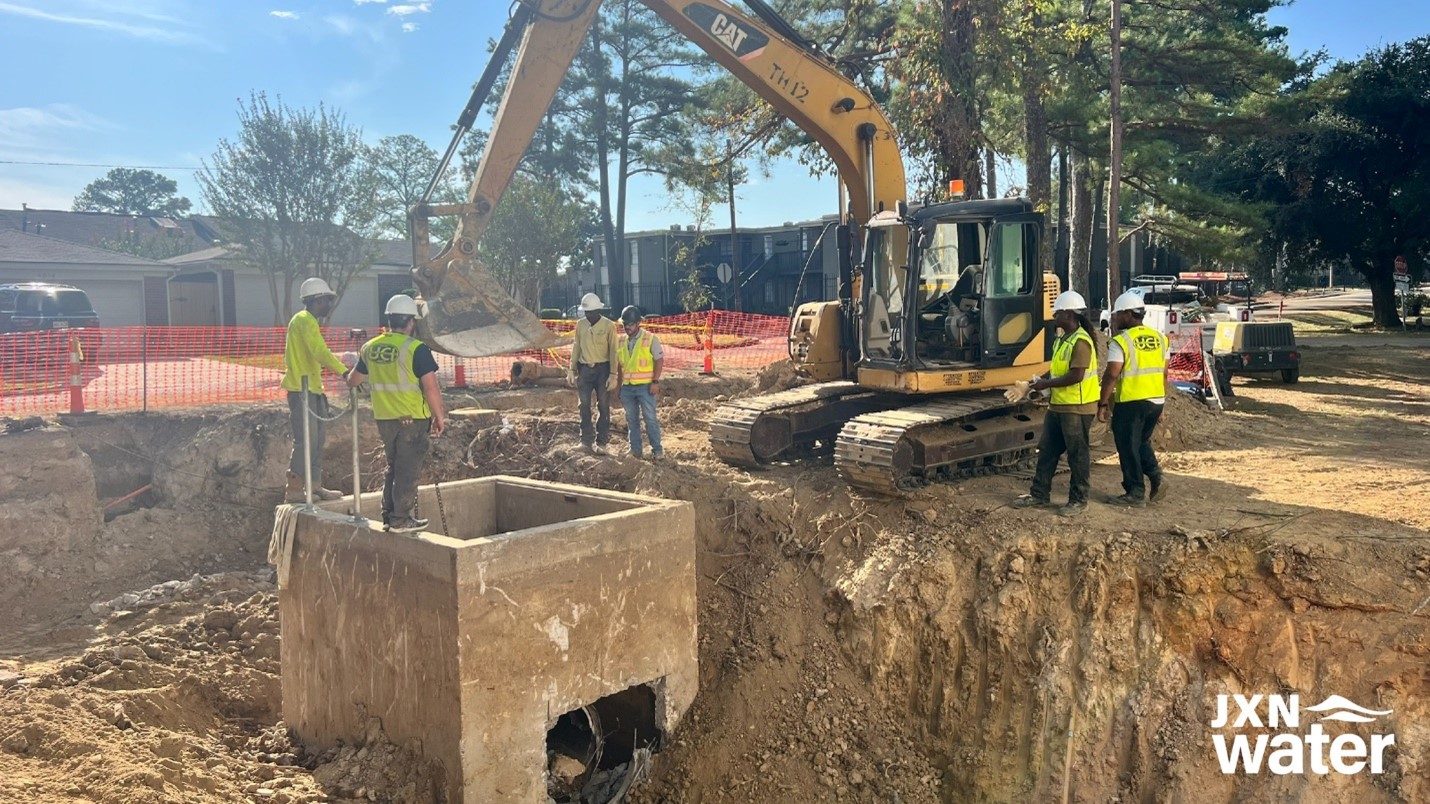
Rebuilding trust starts with literal rebuilding
Sustainable water requires sustainable revenue. To that end, JXN Water’s new rates will rise sharply starting next month. At average residential monthly consumption (4,500 gallons, or 6 ccf) bills will increase roughly 13%. Prices will go up more at higher volumes. For a family of four that uses the typical 50 gallons per person per day (6,000 gallons, or 8 ccf monthly), prices will increase 28%, from roughly $69 to $88 monthly.
Although that’s a dramatic increase, it still leaves Jackson's prices markedly lower than the national average of $97 for combined monthly water and sewer price for 6,000 gal of residential service.* If JXN Water can deliver on the promise of safe water, then the new prices are a tremendous value for the people of Mississippi’s capital city. Bringing Jackon’s water and sewer systems up to regulatory standards is the single most important thing that JXN Water can do to help rich and poor Jacksonians, alike.**
Challenge #2: protecting the poor
But even if the new prices are comparatively reasonable, the sharp increase threatens affordability in a city where more than a quarter of residents live in poverty—more than double the national poverty rate. So JXN Water is using rate design to generate revenue in ways that protect the poor without creating elaborate assistance programs.
JXN Water’s initial plan to peg water/sewer prices to property values was shot down by the state.† So instead, JXN Water took a novel approach: a traditional combination of fixed and inclined-block volumetric charges, but with reduced fixed charges for SNAP (i.e. Food Stamp) participants. Instead of $40 in fixed monthly charges, SNAP customers will pay just $10.
With simplicity at its heart, JXN Water’s new rate structure is, in essence, what I’ve dubbed the Walden Pond Plan. Instead of an increase, customers on SNAP will see a roughly 16% decrease in monthly bills at 6,000 gallons a month—without creating a complicated new social welfare program that would drive up the utility’s overall operating costs. All residential customers will pay the same volumetric charges, which incentivizes efficiency, allows customers greater control over their own water bill, and complies with state law.
Perhaps most importantly of all, linking prices to SNAP participation helps low-income Jacksonians handle their water/sewer bills with very low administrative burden. SNAP recipients will not need to complete lengthy forms to qualify for the lower rates, and they won’t have to provide extensive income, health, or household documentation.

Initially, customers will need to demonstrate that they receive SNAP. In the long run, JXN Water hopes to work with Mississippi’s Department of Human Services to qualify SNAP participants for the new rate structure automatically. That kind of seamless, frictionless process maintains citizens’ dignity, and is the gold standard of good public administration.
It’s a magnificently simple affordability strategy that’s easy on customer and utility alike.
From pariah to paragon?
For the past two years, Jackson’s water and sewer systems have been part of the national conversation for all the wrong reasons. There’s a long way to go, but the turnaround underway at the city’s beleaguered utilities has a chance to change that conversation.
JXN Water’s bold but simple new rate structure is a key part of its broader strategy to deliver safe, sustainable, and affordable water to people who have lived without it for far too long. What’s more, its approach to pricing can work far beyond Mississippi: linking rate structures to SNAP participation could work just about anywhere in the United States. Careful analysis of JXN Water’s experience over the coming year will surely yield valuable lessons for the entire water sector. Out of the Jackson’s crisis could come an elegant and practical pricing plan for utilities across the country.‡
*Based on my new national sample of water and sewer rates in 2023. More coming soon!
** Distrustful customers turn to bottled water, which in turn strains working-class pocketbooks. JXN Water’s news release announcing the proposed rates explicitly compares its prices to its commercial competitors.
†The idea emerged from an exploratory project from the US Water Alliance and Stantec. It’s a promising concept that deserves further development and consideration.
‡Then comes the really hard part: fixing the politics.
The entire system is a mess. I paid 82.85 for a water bill November 3, 2023 On November 29th, I called because I haven't receive a bill for the end of November . I was told that I had a 95.38 credit. On December 3rd, I paid another $ 82.85. I then received a bill December 14 stating that I owed $7.30 for which I paid. December 27, 2023 I received a bill for $ 33.49. You do the math!! This problem is one that our city leader over the last 25 years are responsible for.
My mother is stuck paying for a $2k water bill . She has been trying to resolve this issues since last yr . Another yrs has came no help or any assistance from the city . Water is contaminated, countless drives from tx to Ms to bring clean water . Looks very bad for the city and how tax payer are left to figure this out. . I’m baffled at this point $85 to 2k and it’s just her . None of the resident should be pushed aside especially those who pay . It’s sad how the elderly is treated
Mr. Henifin,
Let’s do lunch my treat. I have questions.
Than you